More Episodes

Money 101 · Episode 9Passive Income Took Me 5 Years To Build
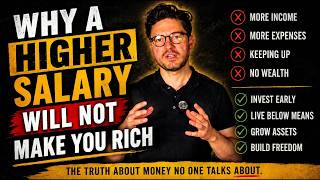
Money 101 · Episode 8Why A Higher Salary Will Not Make You Rich

Money 101 · Episode 7Why You Keep Making The Same Money Mistakes
Money 101 · Episode 11
Look... I rented for ten years. Ten years of fixed monthly payments. Ten years of calling the landlord when something broke. Ten years of watching property prices rise while I waited for the market to correct. It never corrected. And when I finally bought, I discovered something nobody had told me. The mortgage was just the beginning.
Watch directly here or on YouTube
Not financial advice. For educational purposes only. I am not a financial advisor. Property markets vary significantly by country, city and individual circumstances. Always do your own research.
Look... I rented for ten years. Ten years of fixed monthly payments. Ten years of calling the landlord when something broke. Ten years of watching property prices rise while I waited for the market to correct. It never corrected. And when I finally bought, I discovered something nobody had told me. The mortgage was just the beginning. The boiler, the repairs, the maintenance. The costs that arrive without warning and without mercy.
"Was waiting ten years a mistake? The honest answer is more complicated than yes or no."
Look... this is one of the most repeated pieces of financial advice in the world — and one of the most oversimplified. Yes, rent payments build no equity. But mortgage payments in the early years are mostly interest — not equity either. And renters who invest the difference between renting and owning costs can build significant wealth through the market instead of through property.
The question is not "should I rent or buy?" The question is "what is the total cost of each option in my specific situation — and what do I do with the difference?"
Most people calculate the mortgage payment and stop there. The real calculation includes far more:
Look... here is the calculation that changes everything. Take the difference between your total monthly cost of owning (mortgage, maintenance, insurance, taxes) and your monthly rent. Now ask: if I invested that difference every month in a global index fund for 20 years, what would it be worth?
In many European cities — where property prices are high relative to rents — this calculation often surprises people. Renting and investing the difference can produce comparable or superior outcomes to buying, especially if you move within 5 years (buying and selling costs erode returns significantly).
Look... buying is not always the wrong answer. It often makes strong sense when you plan to stay for 7+ years, when the mortgage cost is genuinely comparable to rent in your area, when you value stability and customisation, and when property prices in your area have historically appreciated. The mistake is not considering buying — it is buying without running the real numbers first.
Is renting better than buying?
It depends entirely on your local property market, your financial situation, your timeline and what you do with the difference. In high price-to-rent ratio cities, renting and investing the difference often produces competitive returns to buying. In lower price-to-rent markets, buying earlier may make more sense.
How long should you stay in a house before it is worth buying?
Most financial planners suggest a minimum of 5–7 years to offset buying and selling costs. The break-even point depends on local property appreciation rates, transaction costs and the opportunity cost of your deposit. Running location-specific numbers is essential.
What is the price-to-rent ratio?
The price-to-rent ratio divides the property purchase price by the annual rent for a comparable property. A ratio above 20 generally suggests renting may be more financially efficient. Below 15 typically favours buying. Many major European and North American cities currently sit well above 20.