The Shocking Truth About Money: How €10,000 vs €100,000 Changed My Life
The same percentage can produce dramatically different results when the starting portfolio is larger. Mike uses his own portfolio crossing €100,000 and the documented story of Ronald Read to explain compounding, exponential growth and the harder question of knowing when enough is enough.
What you'll learn
- Why the same percentage return produces different euro gains at different portfolio sizes
- How compound growth becomes more visible as the starting capital grows
- Why the early years of investing can feel slow
- How automatic investing can reduce repeated decisions
- Why building wealth eventually leads to the question of enough
The Shocking Truth About Money: How €10,000 vs €100,000 Changed My Life
The same percentage suddenly looked different
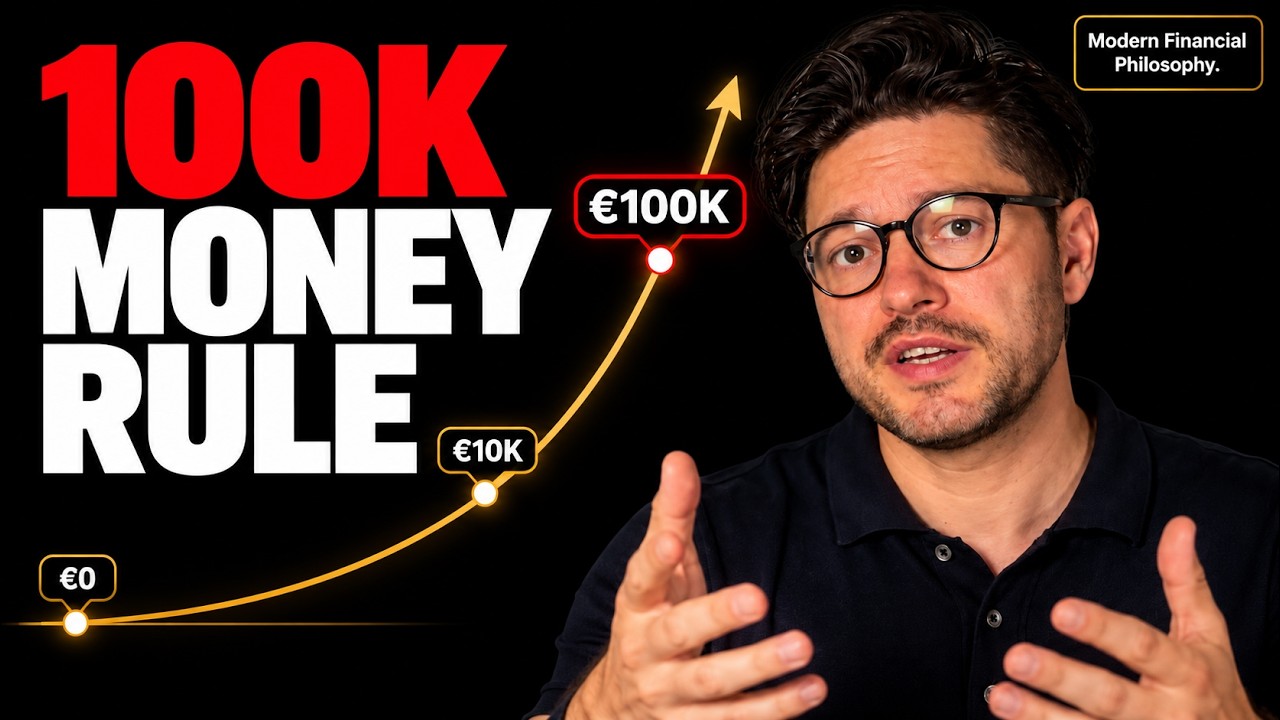
Mike describes moving much of his portfolio from dividend funds into growth funds and then watching the numbers change meaningfully after the portfolio crossed €100,000. A roughly 13% return on €10,000 is about €1,300; the same percentage on €100,000 is about €13,000.
Ronald Read and the boring years
The episode tells the story of Ronald Read, a gas-station worker and later janitor who died in 2014 and left behind almost $8 million. The point of the story is not a secret investment strategy. It is the long period of owning ordinary shares, continuing to invest and allowing compounding to work.
Why the curve is hard to see
Mike connects the experience to research on exponential growth and the tendency to picture percentage growth as a straight line. The early years can look unimpressive, which makes the later acceleration difficult to imagine before it happens.
Doing nothing became part of the system
Mike describes using automatic transfers and reducing the frequency with which he checked his portfolio. The idea is not that everyone should use the same system, but that removing repeated decisions can make a long-term habit easier to maintain.
The harder question comes later
The episode ends somewhere different from a standard compounding lesson. Once the portfolio becomes large enough to feel real, the question is no longer only how to build it. It becomes what the money is actually for and how you will know when enough is enough.
The Mathematics of Enough
The deeper personal essay connected to this episode, exploring the idea behind the numbers and the financial psychology underneath the story.
Read the essay →How does compound interest work?
Compound growth means returns can themselves become part of the amount that earns future returns. The episode illustrates why the same percentage gain creates a much larger euro result when it is applied to a larger portfolio.
Why does €100,000 feel different from €10,000 when investing?
A percentage return is applied to the amount invested. For example, 13% of €10,000 is about €1,300, while 13% of €100,000 is about €13,000. The percentage is identical; the euro impact is not.
Why is compounding difficult to see early on?
Early growth can look small compared with the later stages of an exponential curve. That can make long-term investing feel unrewarding before the effects become more visible.
Educational and entertainment content only. This page is not financial advice. Mike Petry is not a licensed financial advisor. Do your own research or speak with a qualified professional before making financial decisions.